
Wholeness, from the perspective of mental wellbeing is the experience of living as a fully present and centered human being. It starts from knowing who you are as the True Self.
Your True Self is whole.
It is a calm and silent state of being, where You only have 3 qualities:
- I am (the Being state)
- I know that I am;
- There is a certain subtle energy flow that allows you to be (primordial/omnipresent flow that is sometimes called Ananda).
When you are whole as your True Self, you have the inner power to use awareness and sensing at will.
It is your unconscious ego that, as it runs on autopilot mode, can’t experience stillness within; thus, it is going through one inner reactivity after another. When you react, there is no inner freedom. All inner freedom starts from taking responsibility.

Carl Jung, as a psychiatrist, always put emphasis on the importance of knowing the Self. He saw it as the governing principle that allows you to manage your life and see yourself as a whole.
The Self in Jung’s eyes was total unity and the psyche's central archetype. This overlaps with many understandings that originate from different Eastern cultures. Especially from India and the ancient Siddha science that is present in Tamil Nadu.
Knowing your wholeness isn’t a state of the absence of problems in life that unfold. Rather, it is the capacity to remain inwardly calm and serene even when the external Game of Life is uncertain, playful, teaching, or places demanding challenges on your path.
When Can One Feel Whole?
In your core or heart, experiencing wholeness can arise when your mind is calm. A calm-minded conscious person always feels whole and aims to keep inner and outer harmony.
Inner silence is the prerequisite of knowing the True Self as the omnipresent state.
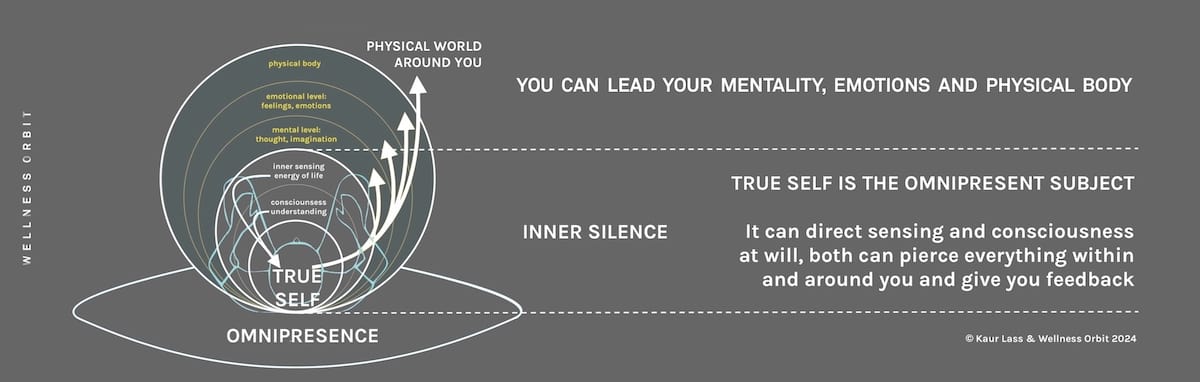
When you are silent and calm, your awareness becomes leadable. Awareness of leading your awareness and sensing, while being fully present, is the key to inner freedom and making conscious choices.
This inner contact with the living silence behind all existence frees you from being driven by subconscious automatic thoughts, imagination, emotional turmoil, fears, desires and anxiousness.
Being fully present and calm is what removes all inner fragmentation. That is when you can (re)discover your True Self and become whole.
Reality is that most people around you spend most of their lives in a divided inner state.
Subconscious reactivity is commonly passed from parents to children and further reinforced by teachers throughout kindergarten and school years. It rolls endlessly in work and personal life situations, causing relationship problems and conflicts.
When your mind and attention run on autopilot, it moves rapidly between past regrets, future worries, and self-judgment. In such a subconscious mode, the mind is constantly reacting to both inner and external pressures. This creates mental noise.
Such inner noise becomes a continuous stream of subconscious patterns and reactivity. Over time, this noise produces a subtle but persistent sense of incompleteness.
As you may have noticed, people may even achieve outward success, and yet still they feel restless and tense. They feel that something essential is missing even when all outer success metrics are visible.
Mental wellness is lost, and individual health suffers because the inner domain is rarely at peace. Most people fail to relax, even when they have more than enough economically and could enjoy life.
When the mind is in turmoil, no external abundance or peace matters. A restless mind creates restlessness around it.
Wholeness begins with inner calmness. A calm mind is your natural inner state.
In inner silence, awareness and sensing become the first silent tools that allow you to notice what the present moment demands (see the last graph above).
Mostly, a free soul or a calm person just chooses a conscious path of doing something and keeps the focus on doing it no matter what happens. Such a person has an inner freedom to do or not to do something.
Most people think that freedom to think what you like is freedom. But is it? It is only partial freedom. Total freedom is to think and not to think. When you don’t think, you experience Being. Then you are in the living inner silence as your True Self. Whole.
Only when you become free from compulsive thinking, imagining the worst, and experiencing constant emotional turbulence can you experience the beauty of inner silence.
In the inner silence, a Human Being can consciously use thoughts, imagination, and feelings as inner tools.
The freedom to act without being subconsciously overtaken by the need to think, imagine, experience emotions, and give in to desires, fears, or anxiousness is what makes you whole.
The coherence between what one thinks, imagines, and feels is what allows conscious choice. This integration of inner calmness and conscious choice is the lived experience of psychological and experiential wholeness.
Wholeness From a Mental Wellness Standpoint
From a mental wellbeing standpoint, wholeness is directly linked to self-leadership and conscious choice.
External stressors, such as meeting deadlines, conflicts, uncertainty, and constant change, are inevitable. What determines their impact is the quality of your power of responsibility.
Responsibility is your ability to make a conscious choice: the ability to respond consciously. Such a response always originates from inner calmness.
A subconscious and reactive mind lacks responsibility. It is often afraid of taking radical responsibility.
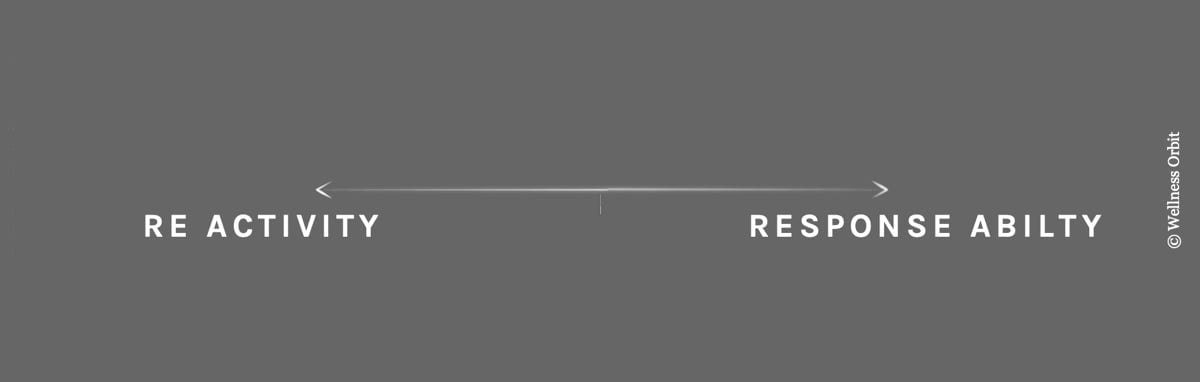
It is your own automatic inner reactivity that turns any external stressor into the experience of pressure.
Pressure turns to stress, and stress, when prolonged, turns into chronic stress. Chronic stress, especially as positive stress, often slowly turns into different phases of burnout. The final phase of burnout again has an 86 to 92% overlap with depression.
Feeling anxious, due to failing to accept your own calm and silent inner nature as your True Self, causes anxiety. Constant experience of stress combined with anxiety often turns into anxiety disorders.
Carl Jung stated: “People will do anything, no matter how absurd, in order to avoid facing their own soul. One does not become enlightened by imagining figures of light, but by making the darkness conscious.”
Your True Self is. It always is. What has happened is that you, on the ego level, have lost contact with your True Self. You no longer feel whole.
As True Self, you are a Free Soul. Whole. However, you don’t know what happens next.
Ego desires certainty. True Self is free from it.
Certainty demands subconscious patterns that are always triggered in the same way. That is what reactivity secures: predictability.
A calm-minded person meets every situation as new. There is no old pattern within, and this is what allows clear perception and calm conscious action that is relevant and pro-life.

The Difference between Conscious Choice and Reactivity
The difference is significant: the conscious being in inner silence brings forward a sustainable path founded in resilience, while the reactive subconscious pattern leads to depletion and fragmentation. In the latter state, people experience themselves as more incomplete. They have lost contact with their True Self and no longer experience wholeness.
The sense of value of the subconscious person is dependent on external validation or constant achievement. A subconsciously reactive person fails to make aligned decisions and remain present in relationships and work. The result is low employee engagement and a buildup of different health and relationship issues.
When wholeness or the experience of the True Self is lost, subconscious patterns take over, and this is what causes 90% of your problems and problems around you. Subconscious people fail to take full responsibility.
Subconsciously reactive persons lack inner freedom and are afraid of meeting themselves, as then their wasted life becomes visible.
Mental wellbeing can improve when the individual is no longer continuously at war with their own thoughts, imaginations, emotions, desires, fears and anxiety. Such a change demands finding inner peace and power to become a conscious and intrapersonally self-leading human being. This website is about restoring inner calmness and understanding your inner domain.
|
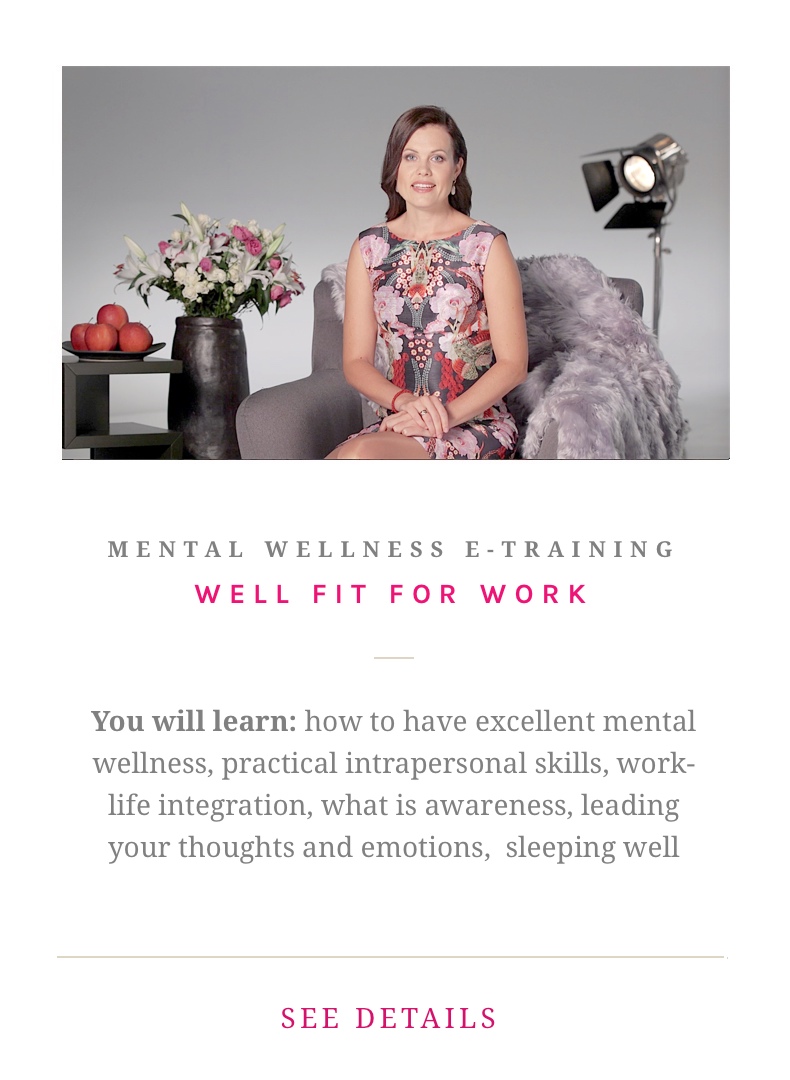
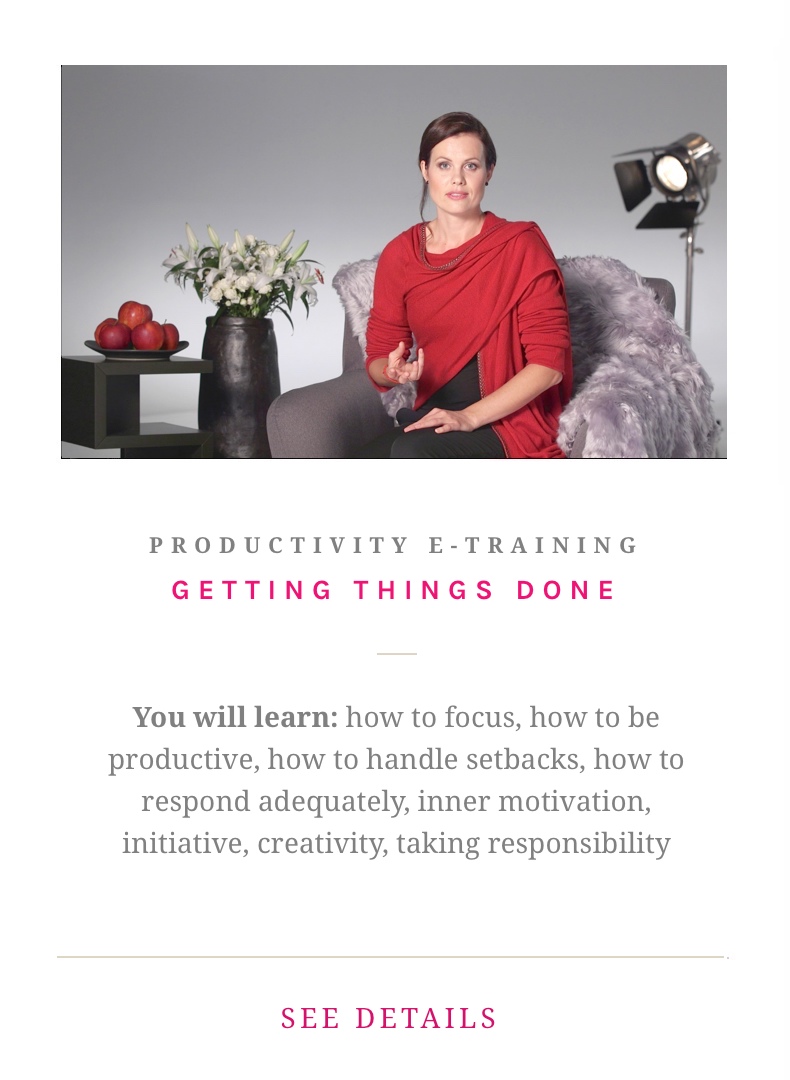
When you learn to use awareness and intrapersonal skills consciously by understanding your inner domain, you become more whole and conscious. It is fun to have a relationship and work with conscious Human Beings who love taking responsibility.
Why Wholeness Matters for Health
Health is fundamentally holistic. Your mind and body form one interconnected system. A fragmented and constantly reactive inner state doesn’t stay calm and neutral to your life experience.
When the mind is chronically reactive, the nervous system remains in a prolonged state of activation. Stress hormones stay elevated, sleep is disrupted, inflammation increases, and immune functions often weaken.
The desire to control everything in life always fails. Life is, and you are. Life is ever-changing, thus unpredictable, but You, as True Self, are constant. It takes a calm mind to notice this.
When you are constantly reactive, then over months and years, such endless reactive patterns contribute to anxiety, depression, burnout, cardiovascular strain, digestive issues, and other stress-related conditions. In essence, a mind that rarely settles places continuous wear on the mind-body complex. When your mind reacts, your body reacts too.
In that sense, when you have negative self-talk, your body's immune system is weakened. As a whole Human Being, you would never state anything negative about yourself and your body.
The body is a great vehicle. The only home you have.
A conscious person does everything in their power to train the mind and body, so that they can remain the delightful servants of the True Self.
When a person regularly returns to a calm and present state, the nervous system has opportunities to recover. The parasympathetic system — the body’s natural rest-and-restore mode — becomes more accessible. Sleep quality improves. Digestion and immune responses are better supported. The power to lead thoughts, imagination, emotions, and physical activities strengthens.
The body of a calm-minded person is no longer constantly wasting energy by living in the inner subconscious reactivity.
Most people carry a huge burden of unresolved self-criticism and suppressed emotions, and a constant sense of lacking something. Such reactive inner patterns generate low-grade but persistent stress that undermines both mental and physical health. Suppressed anger is often related to cancer and serious health issues.
Becoming more aware is what leads to the power to sense and be aware of inner completeness. Understanding who you are and what the actual situation is, is what lightens the subconscious burden.
When you become calm inside, then there is less need to chase external solutions for an internal feeling of incompleteness. This shift towards more inner silence alone can free substantial psychological and physiological resources.
Behaviorally, people who live from greater wholeness tend to make more sustainable health choices. A calm and integrated mind is better able to notice the body’s signals, honor the need for rest, and maintain healthy boundaries.
Impulsive or compensatory behaviors, such as overworking, striving for perfection, emotional eating, drinking, drug addiction or dependency, excessive screen use to feel alive, or other forms of avoidance or dependency, cause inner stressful intensity. All those subconscious patterns are based on fight-or-flight reactions.
Even when the term "fight-or-flight response" is used, it is not correct. It is actually fight-or-flight reactivity. Responsibility is conscious action, allowing wholeness. Reactivity is a subconscious action, a lack of conscious choice. It is your reactivity that causes stress.
|
We need to redefine how we talk about wholeness, health, and wealth (in a far greater sense than being rich financially). Being wealthy and whole needs a new context.
Benefits of Experiencing Wholeness
Individuals who operate from inner calmness and use conscious choices can communicate more clearly, listen more openly, and respond fully consciously. This reduces interpersonal stress, which is itself a major contributor to poor health.
In teams and families, the presence of people who maintain their wholeness through contact with inner silence and True Self can raise the overall mental and emotional safety and create more supportive environments.
For leaders and high-responsibility professionals, the implications are especially important. Conscious thinking and imagination, combined with inner silence and sound judgment, bring out the ability to perform well under pressure.
When leaders are calm and cultivate wholeness, they protect their own health and model a more sustainable way of working for others and with others. They are less likely to transmit chronic tension through the system and more capable of fostering cultures where mental wellbeing can exist.

Cultivating Wholeness as a Foundation for Health
Being present and having a calm mind is a holistic capacity that grows through practices that strengthen awareness and inner calmness.
A calm-minded person who knows the True Self is observant and always caring and responsible.
That is why we all need to train intrapersonal skills. Knowing your calm essence and having the power to lead inner processes secures health and wealth in the widest context.
Learning to calmly observe and lead your thoughts, imagination, and emotions without identifying with them is what creates the space between inner and external stimuli. It disrupts reactivity and permits conscious response.
A holistic approach to mental wellness is proactive. It is freeing your inner power to do conscious work and sustain conscious loving relationships.
So, instead of being in fight-or-flight mode and becoming exposed to stress or burnout, individuals learn to recognize early signs of inner fragmentation and restore their wholistic being.
Over time, remaining in constant inner calmness becomes a natural skill rather than an occasional recovery effort. However, without understanding the intrapersonal level, it is hard to be whole. And here we need to remind you that training mental fitness is just as important as training physical fitness.
A fit mind is always interested in having a fit body and healthy human relations. A fit mind is engaged, focused, and thrives at the chosen work. It sees the meaning and motivation in what it has chosen to do consciously.
Conclusion
Genuine wholeness starts from your ability to remain centered in inner calmness. From there, you can (re)discover the True Self.
Investing in inner calmness and mental wellness proactively is one of the most direct ways to support long-term health. Nutrition, movement, and medical care remain essential. Yet without a calm mind, even the best external strategies are undermined by subconscious reactivity and cause chronic stress that leads to burnout, depression, and a wide variety of physical health issues.
Wholeness matters because it restores natural coherence between mind and body. It allows a person to meet life from a calm presence rather than perpetual defense. In that sound, silent full presence, mental wellbeing becomes a value that is easy to sustain.
A fit mind is always searching for how to secure physical health and protect life. A fit mind finds motivation in what it does.
In a world that constantly pulls attention outward and fragments experience, securing inner calmness and psychological wholeness is a foundational health practice. Practical intrapersonal skills enable people to live with calm inner clarity, be resilient, and experience genuine wellbeing. So, make a conscious choice: start training your mind NOW!
|