Motivation is one of the most discussed and yet often misunderstood drivers of performance in contemporary workplaces.
Many organizations still rely on external incentives like bonuses, promotions, performance rankings, or pressure-driven targets and hope those keep people engaged. But in reality, employee engagement levels remain low.
All external measures of motivating people may deliver short-term results; however, those rarely create lasting motivation and improve long-term employee loyalty.
In a knowledge economy driven by conscious choice and creativity, a superficial grasp of motivation is no longer sufficient; a deeper understanding is required.
When motivation is driven by external measures that lead to intrapersonal pressure, it leads to elevated stress levels and even excess anxiety. This may actually accelerate burnout and anxiety disorders rather than enhance actual results.
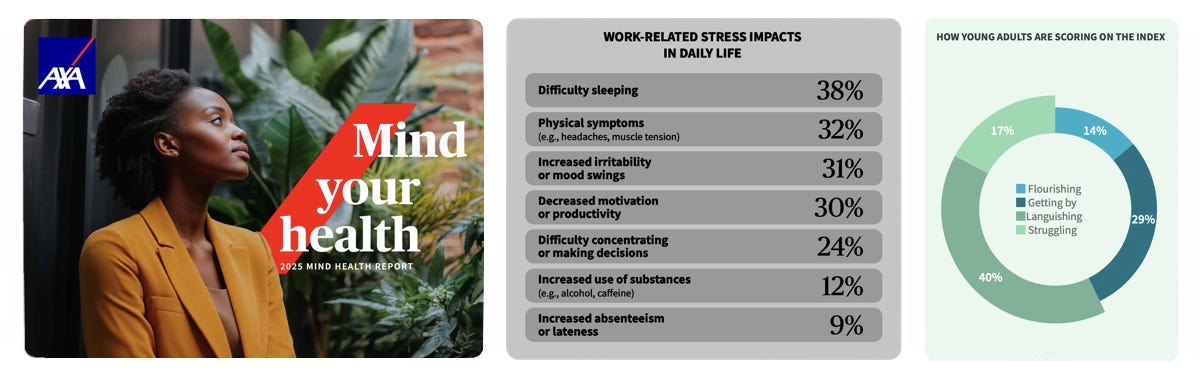
The 2025 AXA Mind Your Health report stated, „25% of people are potentially affected by anxiety, stress, or depression at severe or more extreme levels, vs. 23% in 2023.“ See more conclusions in the image below.
Rather than relying on carrots or sticks, the most reliable motivation is intrinsic. It is fueled by the meaning found within tasks and the satisfaction of making progress. This sense of agency ensures that engagement remains both high and healthy.
For HR leaders, training managers, and business leaders, this insight is critical.
Sustainable motivation is a strategic capability that directly affects performance, retention, mental wellness, and long-term organizational resilience.
Why External Motivation Fails Knowledge Workers
In roles that rely heavily on cognitive effort, external motivation tends to fail over time. People may comply, but they disengage internally.
As focus moves away from intrinsic values like learning and contribution, and toward external markers like outcomes and approval, workplace stressors become increasingly intrusive.
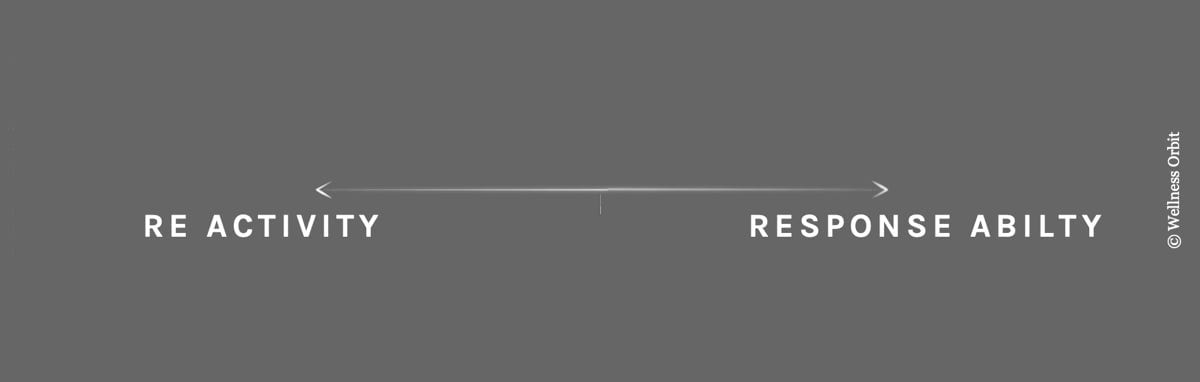
When stress levels get higher, access to creativity narrows, conscious decision quality declines, and reactivity replaces taking responsibility. Those are on the polar end of the scale; a reactive person loses the ability to make conscious choices (see the graph above). So, the more reactive you become, the less motivation you can find in what you do.
Many high performers experience fading motivation and the build-up of stress and anxiety silently, appearing productive while moving steadily toward exhaustion. The issue is rarely a lack of ambition; it is a lack of intrapersonal skills and meaningful connection to the work itself.
.jpg "Take a personal stress test and enjoy feedback!")
|
The most stable motivation grows from action and understanding. Understanding isn't about thinking. Understanding is awareness-based intrapersonal skills. It appears when you are conscious, present, and in the flow state.
Also, when individuals see how their work contributes to something tangible and worthwhile, motivation becomes intrinsic. It strengthens as people engage with the task, make progress, and develop mastery.
All mastery is based on having good skills.
Here, two kinds of skills play a role: professional skills and intrapersonal skills. Improving awareness about awareness and training intrapersonal skills improves conscious action and allows persons to use their professional skills to the fullest.
For example, if you know how to keep focus, work is easier. Focus is a learnable skill, but it is easy when your mind is calm and tension-free. In essence, focus is consciously directed awareness.
The Core Truth: Motivation Emerges From Action and Meaning
The most stable motivation comes from doing work that makes sense to the person doing it. When individuals understand why their work matters and how their actions contribute to something tangible, motivation becomes intrinsic.
When you know the focus of your team and how your task contributes to the big picture, it is easy to find meaning in what you do.
Intrinsic motivation has three defining qualities:
- It grows through action; it increases once people start engaging with the task itself, especially when the work is broken into achievable steps. When people experience meaning and autonomy, they take responsibility and own the work results.
- It is reinforced by progress, not perfection; small wins, visible learning, and incremental improvement create momentum and bring joy from reaching the milestones along the way. Also, clear communication helps as it allows people to see how different parts of the puzzle fit together.
- It supports mental wellness rather than draining it; when people feel heard, can take pauses, and possess good intrapersonal skills, they feel calmer. Allowing people to train their minds and restore themselves makes them more resilient.
In other words, motivation is something that leaders create the conditions for. Small, achievable steps and good leadership matter more than distant big goals, because progress reinforces confidence and focus.
Meaning Is the Antidote to Stress-Driven Performance
Stress is often framed as a workload issue, but in reality, it is often also a meaning issue. People can handle demanding work when they have good intrapersonal skills, and the work itself is experienced by them as purposeful.
Employees struggle more when effort feels disconnected, unclear, or misaligned with the values that are communicated but not lived up to.
When meaning in work is absent:
- Tasks feel heavier than they actually are.
- Decision fatigue increases.
- Reactivity replaces conscious action.
- Stress and burnout develop quietly as pressure builds and understanding is missing.
Conversely, when people understand the why behind their work, they are better able to regulate pressure.
A calm, focused mind is efficient, resilient, and decisive.
However, you can't use the skills you miss, and most people miss intrapersonal skills, as our schools have lacked intrapersonal education.
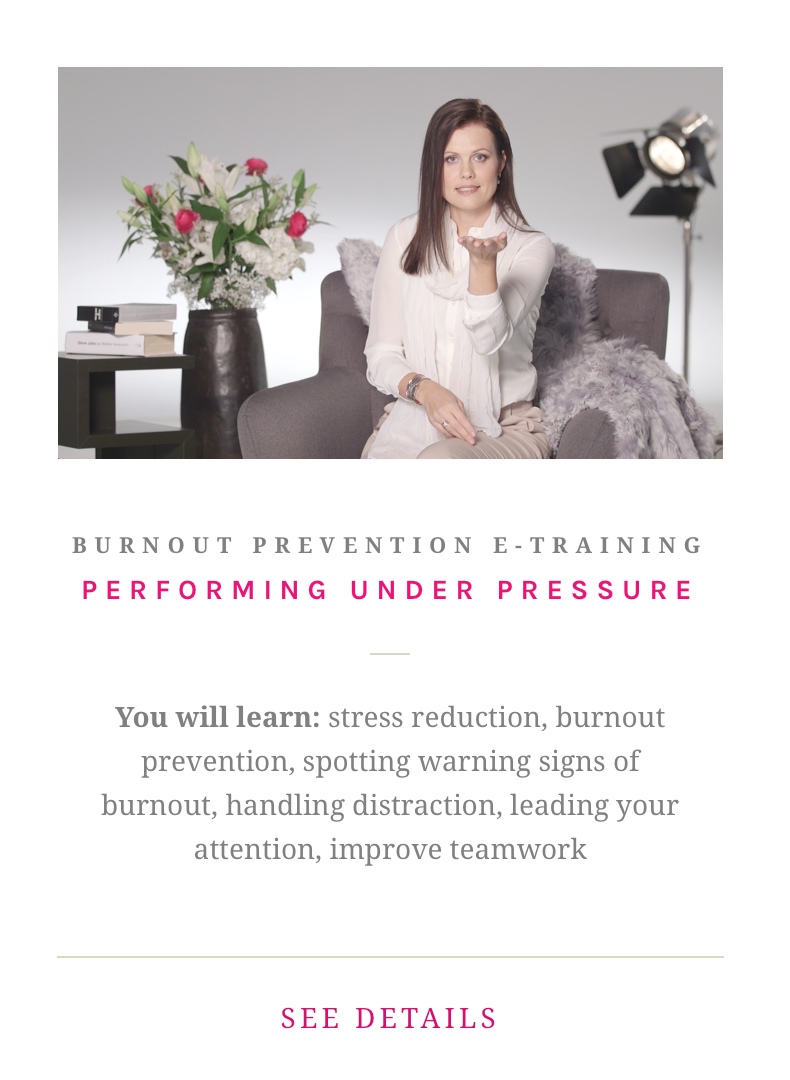
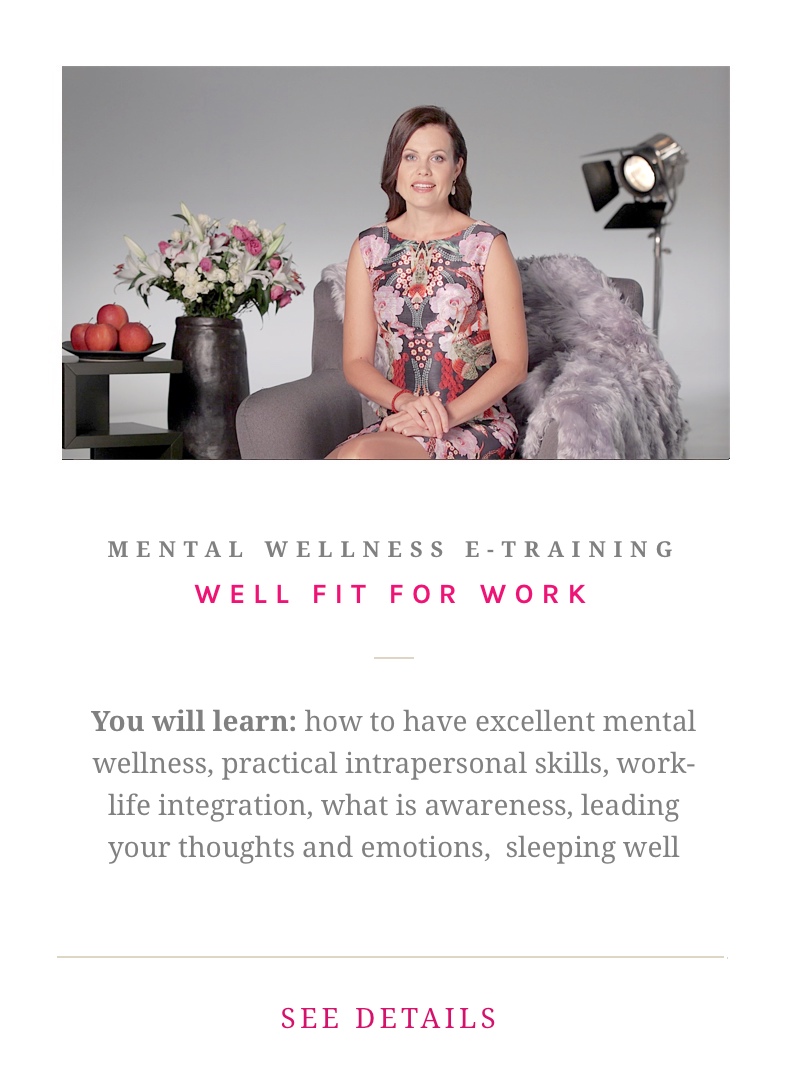
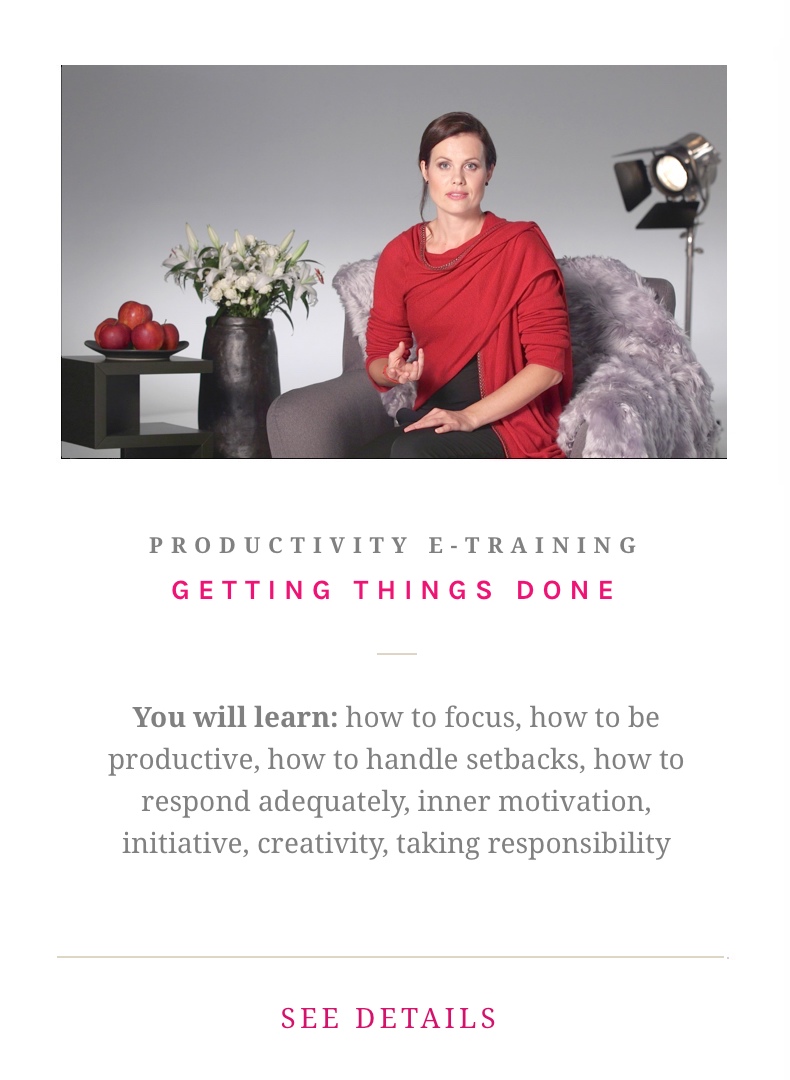
This is why early stress reduction isn't a nice-to-have wellness benefit and should be seen as part of a sustainable performance strategy (see the video below). Training the mind to stay fit, focused, and less reactive allows motivation to remain steady even in demanding environments.
The Role of Leaders in Securing Intrinsic Motivation
Leaders play a central role in securing motivation. However, not through motivational speeches and emotional motivation trainings, but through how work is structured and modelled.
Honesty will take you further than emotional motivation, which can be dangerous as you overlay negative emotions and concepts with positive ones and create inner conflicts in a person. All emotions rise, peak, and fade. This is the law of nature, which states that all energy (including emotional energy) always changes.
However, when leaders clarify purpose, encourage ownership, and demonstrate calm, accountable decision-making, they create psychological safety. When you’re radically transparent and open-minded, you strip away excuses, denial, and avoidance.
In such a safe environment, people become more willing to engage deeply with their work rather than simply coping with it.
Accountability is strongest when people have the mental capacity to think clearly, access intuition and creativity, and act consciously.
Training the mind is a crucial but often overlooked component of motivation.
Stressful reactivity and constant urgency cause emotional overload and consume energy. When stress builds and turns into burnout, even meaningful work begins to feel draining.
Mental wellness training authorizes improved self-awareness and strengthens focus under pressure.
When people are less reactive, they can stay present with their work, allowing motivation to arise naturally from clarity and competence rather than force.
What keeps motivation alive is a clear rhythm of action: knowing what matters today, understanding how today’s work contributes to broader objectives, and having permission to learn and adjust without fear. This approach reduces overwhelm and keeps attention on what is within immediate control. As a result, stress decreases and employee engagement improves.
Workplaces that secure motivation through making meaning of work understood and invest in proactive mental wellness trainings see tangible benefits. Engagement rises without constant incentives, burnout and absenteeism decrease, decision-making improves, and experienced professionals are more likely to stay.
Most importantly, people bring more of their real capacity to work. They act more consciously, collaborate more effectively, and recover faster from different challenges they meet along the way.
Final Thought: Motivation Is About a Calm Mind Aligning With Purpose
The best way to secure motivation is to remove what blocks it. Excessive stress, unclear purpose, constant inner reactivity, and unmanaged mental load are the real motivation killers.
When people understand the meaning of what they do and are supported in training their minds, then a calm focus can be valued over constant urgency.
Intrinsic motivation emerges naturally from the work itself if you have a calm and fit mind. The good news is, you can train your mind and improve intrinsic motivation, so start now!
When intrapersonal skills and purposeful work meet, sustainable performance truly begins.
|